
Our passion for unique
and rare plants
I have been fascinated by the natural world since a very young age.
After the release of BBC’s documentary series Walking with Dinosaurs in 1999, I became deeply interested in prehistoric animals. I was seven years old at the time. I started collecting fossils, visited as many exhibitions as possible and began reading scientific works, especially about the Sauropodomorpha. For many years, my dream was to become a palaeontologist.
Nature became an important part of my childhood. My parents regularly took me to the Ardennes, one of the few regions in Belgium with dense forests, open landscapes and wide panoramic views. The forest fascinated me. During several educational weekends, we were guided by Maurice, a mycologist specialised in the Russulales. His knowledge and passion were infectious. We collected mushrooms, examined their morphology, studied their habitat and ecology, searched through literature and finally identified them scientifically. This was my first real encounter with taxonom
Natural history documentaries, especially those presented by Sir David Attenborough, shaped the way I looked at the world. I wanted to understand nature, not only admire it. I was lucky to grow up in a family that travelled regularly. My parents taught me to appreciate different countries, cultures, landscapes and languages. Those journeys showed me how diverse, fragile and valuable our planet really is.
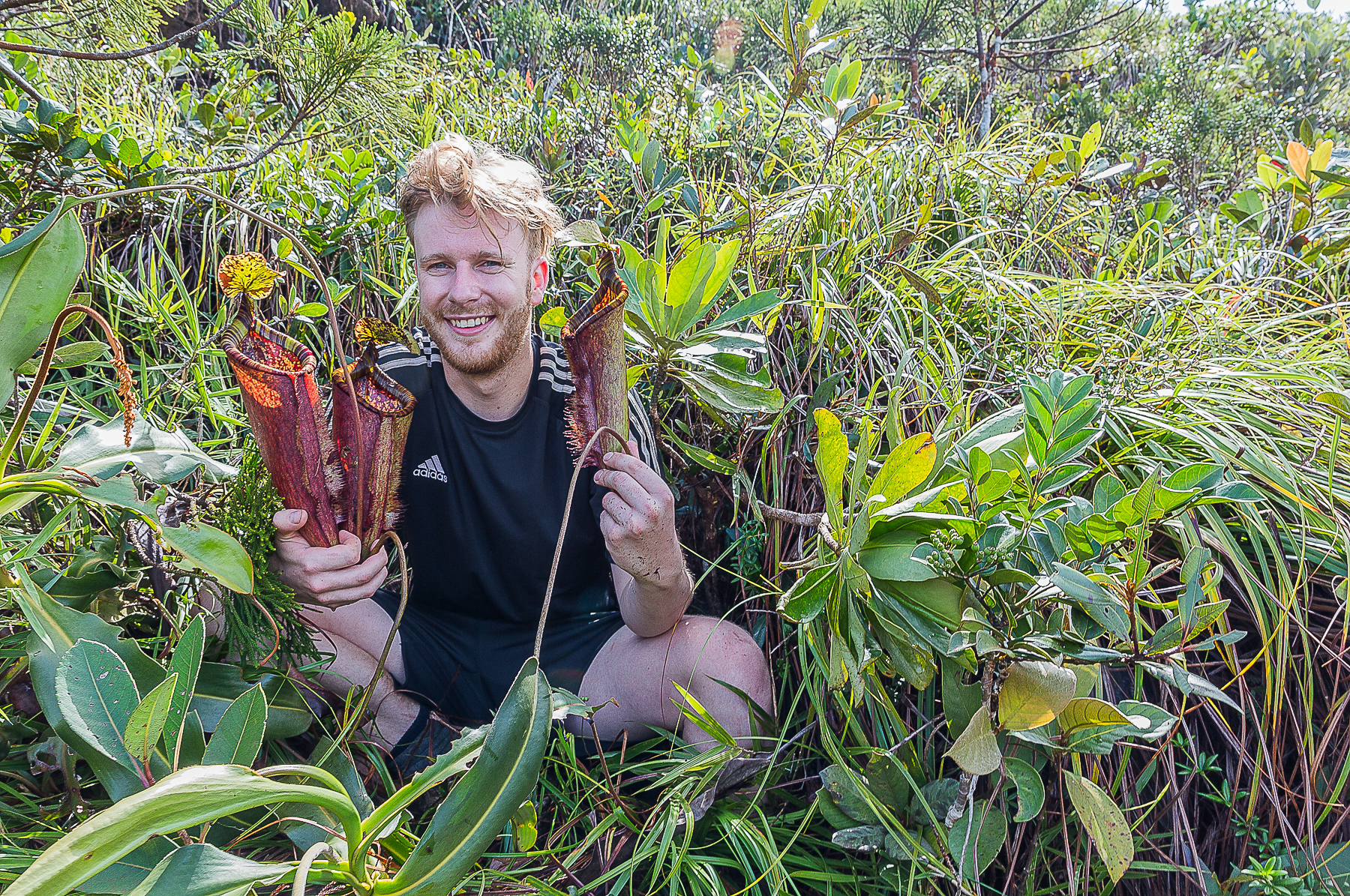
At the age of eleven, my mother and I walked into a local garden centre. That was where I saw my first carnivorous plant in real life: a Venus flytrap. I was fascinated by the fact that a plant had evolved specialised traps to capture insects. I bought one, and before long, I had a small collection of Venus flytraps and North American pitcher plants.
Soon after, I discovered the tropical genera within carnivorous plants. Heliamphora immediately stood out to me. Not only because of their elegant morphology, but also because of the extraordinary habitats where they occur: the remote table mountains of the Guiana Highlands. I built a dedicated terrarium and acquired my first Heliamphora and Nepenthes. From that moment, my interest in tropical pitcher plants only grew stronger.
At seventeen, I wanted to explore the world myself. I was fascinated by the tepuis of Venezuela and wanted to join an expedition to Mount Roraima, but my parents felt I was too young. Two years later, I made my first solo trip to Iceland in winter. Seeing the aurora borealis was unforgettable.
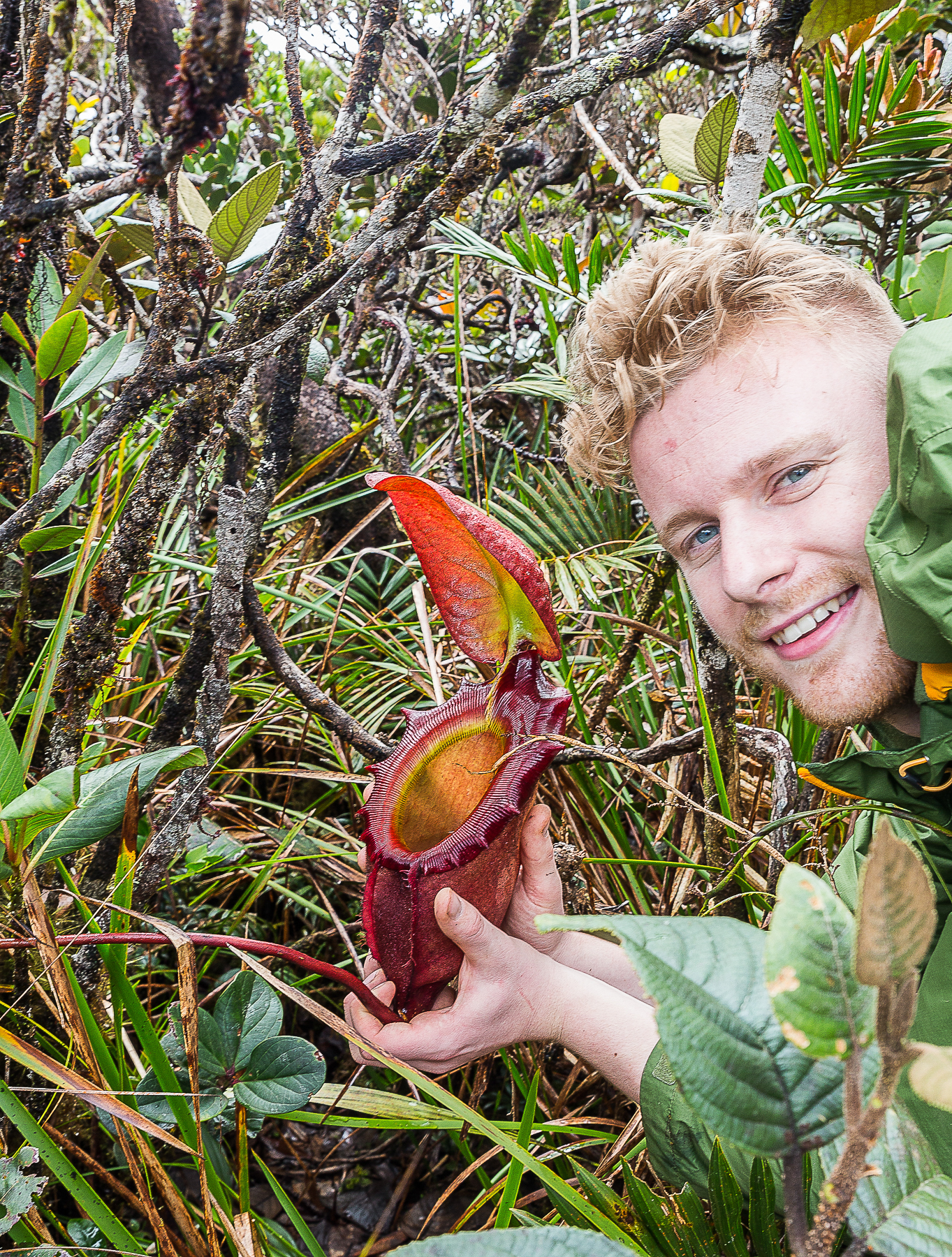
After that experience, I travelled to Sulawesi with one clear goal: to see Nepenthes in habitat. My first tropical expedition changed everything. The purity and beauty of the jungle were astonishing. I will never forget my first steps into the montane rainforest in a remote part of Sulawesi. During that trip, I saw my first tropical carnivorous plant in situ: Nepenthes maxima. After seeing several Nepenthes species in the wild, I knew I wanted to explore more.
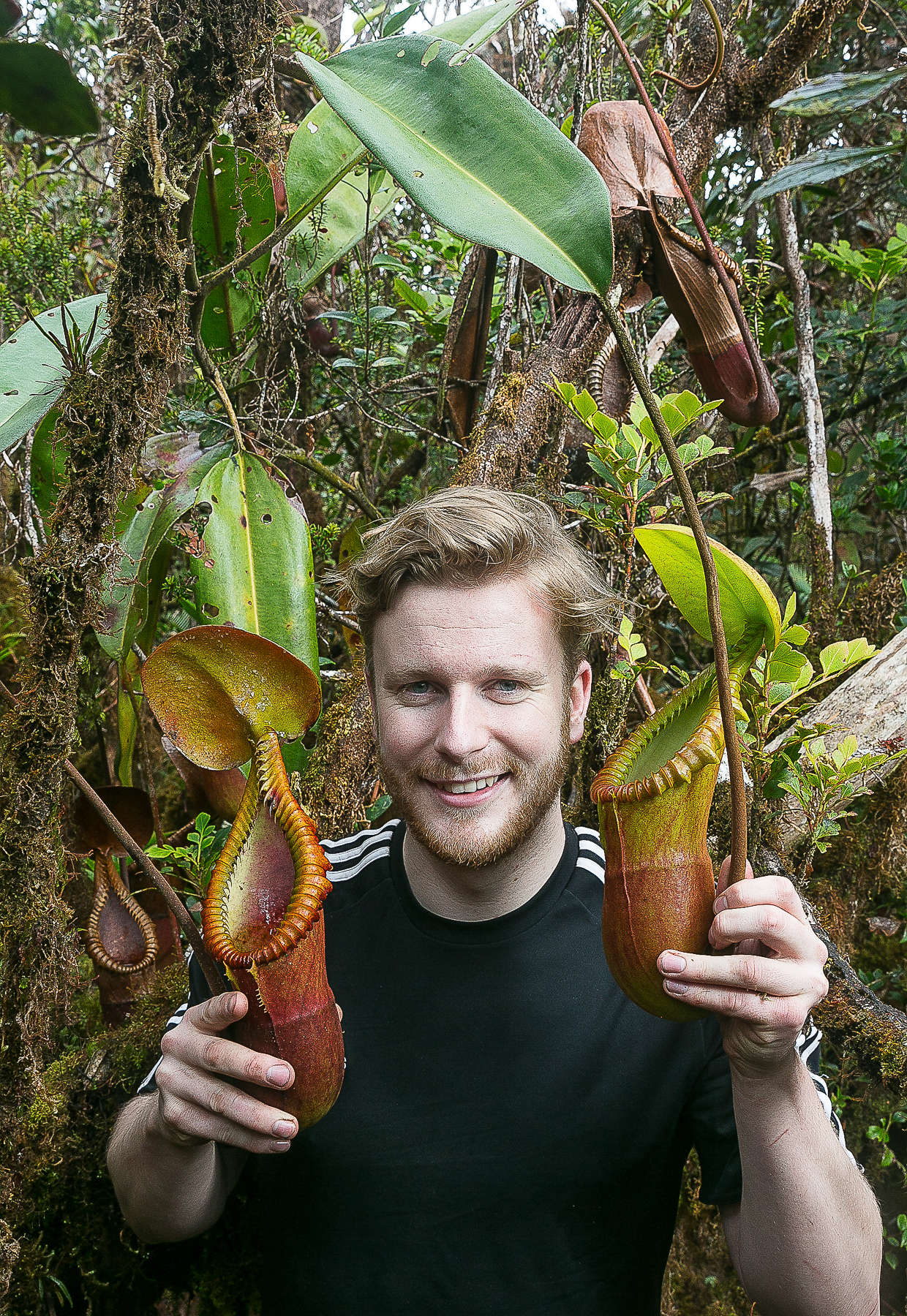
That journey led to many more expeditions. Over the years, I visited some of the most pristine and beautiful regions in the world. I explored remote areas, stood on summits few people had visited and encountered plants in habitats that left a permanent impression on me. Along the way, I met people who live close to nature and others who share the same passion for the natural world. Some of them became close friends.
My passion for plants and the natural world eventually led me to studies in agro- and biotechnology and plant breeding. During my studies, I had the opportunity to work at Kew Gardens in London and at several research centres.
Since 2018, I have been working for Deroose Plants Group as Business & Assortment Development Manager.
About Taerwe Tropicals,
Taerwe Tropicals started as a private collection that kept growing year after year.
By the end of 2016, my collection had expanded into several small greenhouses. In 2019, I officially started Taerwe Tropicals as a secondary occupation. What began as a personal passion gradually developed into a specialised nursery with a clear focus.
Today, Taerwe Tropicals focuses exclusively on Nepenthes and Heliamphora.
We breed, produce and sell these two genera only. That narrow focus is intentional. It allows us to work with depth, selection and long-term vision instead of offering a broad but shallow range of carnivorous plants.
In 2020, we built a highly automated tropical greenhouse of 250 m². This facility is used as a collection and breeding greenhouse. It houses our selected mother plants, breeding lines and valuable genetics. This is where we make new crosses, evaluate seedlings and select plants with strong potential for collectors, growers and the specialist plant market.
Our own greenhouse is not designed as a large-scale production facility. It is the heart of our breeding program and the place where our genetic work begins.
For production, Taerwe Tropicals works together with an external partner. This gives us access to more than 500 m² of additional production space. Through this setup, we keep our own tropical greenhouse focused on breeding, selection and collection management, while still organising reliable production for future releases.
Taerwe Tropicals stands for carefully selected Nepenthes and Heliamphora genetics, developed with patience, technical knowledge and genuine respect for the plants.